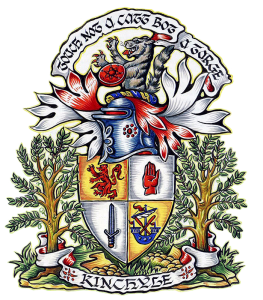
Notable MacBeans
We are our stories, and Clan MacBean is full of wonderful characters: a giant at Culloden, a swordsman, pioneers and frontier judges, a Gaelic scholar, a moonwalker, an Olympic champion, and a department-store chief who brought championship curling to America. Here are some of them.
MacBean, McBain, MacBain, Bean, Beane, McBane: the name has many spellings. Know a MacBean who belongs here? Tell the genealogist.

Hughston M. McBain of McBain (1902–1977)
21st Chief of Clan MacBean · father of American championship curling · head of Marshall Field & Company
In 1960 the Lord Lyon recognized Hughston McBain as Chief of Clan MacBean, giving the clan its first chief in some 170 years. He bought back a piece of the old clan lands above Dores and Loch Ness to create McBain Memorial Park. He was also the father of American championship curling: he founded the Chicago Curling Club and in 1957 created the first United States Men’s National Curling Championship. In business he rose from Grand Rapids, Michigan, to lead Marshall Field & Company, the great Chicago department store.
Hughston McBain was born in Grand Rapids, Michigan, on 9 February 1902, the first of the chiefly family to be born in the United States. When the Lord Lyon recognized him as Chief in 1960, Clan MacBean had its own chief again after some 170 years.
He founded the Chicago Curling Club in 1948 and was its first president. He then dreamed up the first U.S. Men’s National Curling Championship, held at Chicago Stadium in March 1957 with Marshall Field’s as quiet sponsor. Sports Illustrated reported that he threw the first stone himself, and on the final night swapped his business suit for a red tartan jacket and predicted curling would grow “like golf, like hockey, like bowling.” To him it was a game for everyone, not just the wealthy. He helped found the national curling association, and the championship he started still crowns America’s best each year. Curling became an Olympic medal sport at Nagano in 1998, and in 1988 he was named to the USA Curling Hall of Fame.
He also became one of Chicago’s leading business and civic figures. At Marshall Field’s he was president and later chairman and chief executive; in May 1958 TIME reported his retirement after fifteen years at the top, during which the store opened its first suburban branches. He was also a director of the First National Bank of Chicago and president of the Illinois St. Andrew Society.
Learn more:
Warriors and soldiers

Major Gillies “Mòr” MacBean (died 1746)
14th Chief of Clan MacBean · killed at Culloden
Gillies Mòr (“big Gillies”) was a major in Lady Anne Mackintosh’s regiment, the Clan Chattan regiment, at Culloden on 16 April 1746. He held a gap in a wall against government dragoons and is said to have cut down thirteen or fourteen of them before he fell.
Gillies was a son of William MacBean of Kinchyle and Jean Mackintosh of Kyllachy, and is said to have stood at least six feet four inches tall. When Prince Charles Edward Stuart raised his standard in 1745, Gillies took a commission as a major in Lady Anne Mackintosh’s regiment.
At Culloden, government dragoons broke through a wall to attack the Highlanders from the side. Gillies threw himself into the gap and fought with his back to the wall. Iain Breac MacDonald, who saw it, said he mowed the dragoons down “like dockens”. A government officer is said to have tried to call his men off to spare so brave a soldier, but it was too late. His son Donald, who fought beside him, became the 15th Chief.
A lament for him, attributed to Lord Byron, begins:
The clouds may pour down on Culloden’s red plain,
But their waters shall flow o’er its crimson in vain…
Learn more:
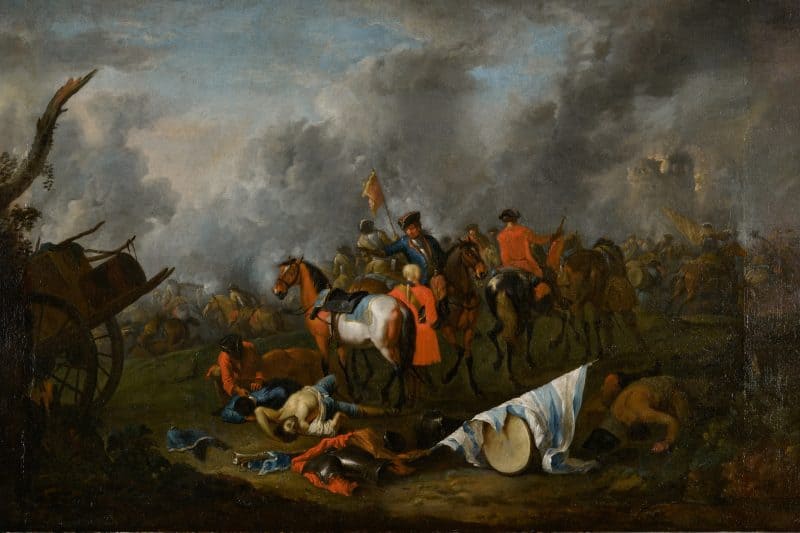
The Battle of Minden, 1759, by Johann Gerhard Huck. Public domain, via Wikimedia Commons.
Lieutenant-General Forbes Macbean (1725–1800)
Royal Artillery officer · Fellow of the Royal Society
Forbes Macbean commanded a brigade of guns at the Battle of Minden in 1759, later ran Portugal’s artillery, and commanded the Royal Artillery in Canada during the American Revolutionary War.
A son of the Reverend Alexander MacBean of Inverness, Forbes Macbean entered the Royal Military Academy at Woolwich in 1743 and was commissioned in the Royal Artillery in 1745. Within weeks he was commanding two guns at the Battle of Fontenoy, and later that year he served at the siege of Carlisle.
At Minden in August 1759 he commanded ten medium 12-pounder guns, and Prince Ferdinand of Brunswick thanked him by letter and rewarded him with 500 crowns. In 1762 he went to Portugal, where he became a colonel of artillery and in 1765 its Inspector-General. From 1778 he commanded the Royal Artillery in Canada. In 1786 he was elected a Fellow of the Royal Society, only the second artillery officer to be so honored. He died near Woolwich Common in 1800.
Learn more:
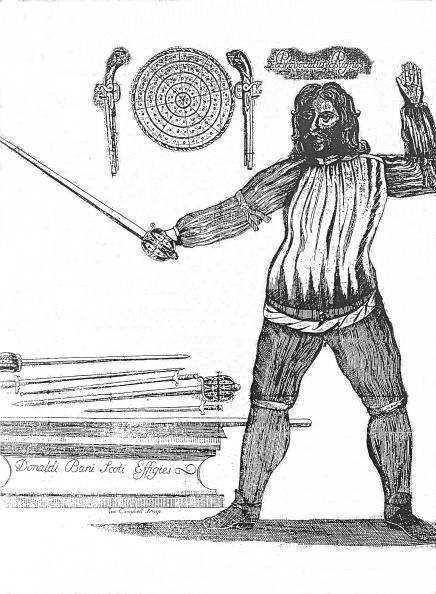
From The Expert Sword-Man’s Companion (1728). Public domain.
Donald McBane (about 1664–1732)
Soldier, swordsman and author
Born in Inverness, Donald McBane ran away from an apprenticeship to join the army in 1687. Tradition makes him the soldier of the Soldier’s Leap at Killiecrankie, and he once fought a battle with his small son in his haversack. His book The Expert Sword-Man’s Companion (1728) is one of the liveliest soldier’s memoirs of its time.
The Soldier’s Leap. In 1689 Donald was serving on the government side in Colonel Grant’s regiment at the Battle of Killiecrankie, where the Highland army won. Tradition names him as the redcoat who escaped the rout by leaping across the River Garry, a jump of about 18 feet, at the spot still called the Soldier’s Leap.
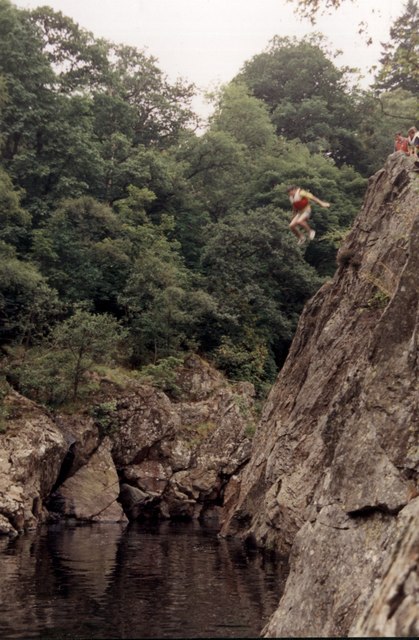
The Soldier’s Leap, Killiecrankie. Photo: Elliott Simpson, CC BY-SA 2.0, via Wikimedia Commons.
A baby in battle. Donald served for decades, mostly with the Royal Regiment of Scots. At Blenheim in 1704 he was left for dead and stripped to his shirt, but survived. At Malplaquet in 1709 his wife had left their little boy with a comrade’s wife who had a horse. When that woman heard her husband was dead, she rode to the front line and threw the boy to Donald. He carried him in his haversack, and when the boy was shot in the arm, Donald found a surgeon to dress it and got him a dram and a leg of fowl. In the morning the boy went back to his mother.
A famous duellist, Donald fought his last duel in Edinburgh in 1726, aged about 63, won it, and swore to fight no more.
Learn more:

Major-General William MacBean VC (1819–1878)
From private soldier to general
Born in Inverness, William MacBean joined the 93rd Sutherland Highlanders as a private and rose through every rank to command the regiment. At Lucknow in 1858 he won the Victoria Cross. His marble bust stands in Inverness Town House.
William was born in Inverness on 1 January 1819, the son of a shoemaker, and enlisted in the 93rd (Sutherland) Highlanders around 1835. He never left the regiment. Commissioned in 1854, he served in the Crimea at the siege of Sebastopol, and during the Indian Mutiny at Cawnpore and Lucknow. On 11 March 1858, at the storming of the Begum Bagh, he is recorded as killing eleven of the enemy with his own hand in the main breach, for which he received the Victoria Cross.
In 1873 the former private became commanding officer of the 93rd, and he retired a major-general. He died in 1878 and is buried in the Grange Cemetery, Edinburgh. His Victoria Cross is held by the Argyll and Sutherland Highlanders Museum at Stirling Castle.
Learn more:
Pioneers of the American frontier
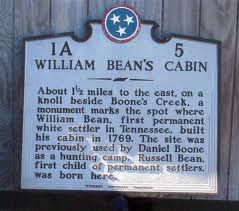
The cabin-site plaque. Public domain, via Wikimedia Commons.
William, Lydia and Russell Bean
The first family of Tennessee
In 1769 William Bean built a cabin on the banks of the Watauga River and became Tennessee’s first permanent settler. His son Russell, born there soon after, is recorded as the first child born to permanent settlers west of the Appalachians. Many Tennessee Beans trace their line here; see the Tennessee Patriarchs tree in the Members Area.
The Tennessee Encyclopedia calls William Bean “Tennessee’s first permanent settler.” A Daughters of the American Revolution marker reading “Site of cabin erected 1769 by William Bean – Russell Bean” still stands near Gray, in Washington County.
Frontier life was dangerous. During the Cherokee siege of Fort Watauga in 1776, William’s wife Lydia Russell Bean was taken captive and was about to be burned at the stake when Nancy Ward, the Cherokee “Beloved Woman,” used her authority to save her. Ward took Lydia into her own home before letting her return, and is said to have learned butter- and cheese-making from her.
Learn more:
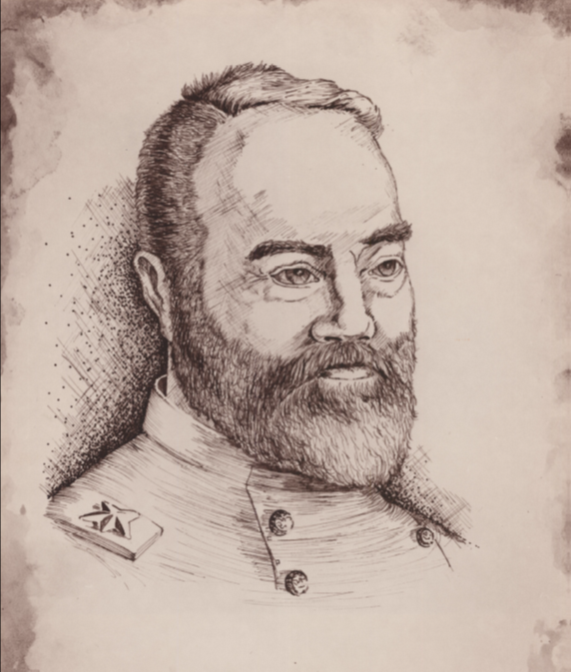
City of San Diego. Public domain, via Wikimedia Commons.
Joshua Bean (about 1818–1852)
First mayor of San Diego
Born in Mason County, Kentucky, Joshua Bean went west, became the last alcalde of San Diego and then, in 1850, its first mayor. His younger brother was Judge Roy Bean.
As alcalde Joshua held the Spanish-style office that combined mayor and judge. When San Diego was incorporated he became its first mayor, serving from 1850 to 1851, and he was appointed a major general of the California State Militia.
His life ended violently: in November 1852 he was ambushed and killed near Mission San Gabriel. Four men were executed for the crime, though it was later reported that someone else may have been responsible. Roy, who had followed him west, took over his saloon.
Learn more:

Judge Roy Bean (about 1825–1903)
“The Law West of the Pecos”
Joshua’s brother Roy became a legend of the Texas frontier: a saloon-keeper and Justice of the Peace who held court in his own saloon beside the Rio Grande.
Roy left Kentucky at sixteen and lived a wandering, often rowdy life in New Mexico and California; one story has him escaping jail with knives hidden in tamales. In 1882 he was appointed justice of the peace in Pecos County, Texas, and styled himself “The Only Law West of the Pecos.” At the railroad stop he renamed Langtry he held court in his saloon, the Jersey Lilly, named for the English actress Lillie Langtry, whom he adored. She sent him a pair of pistols, but visited the town only after his death.
His rulings became legend, from fining a dead man $40 to granting divorces he had no power to grant. Despite the “hanging judge” of Western films, he handed out far more fines than hangings. He died in 1903.
Learn more:
Scholars, writers and artists
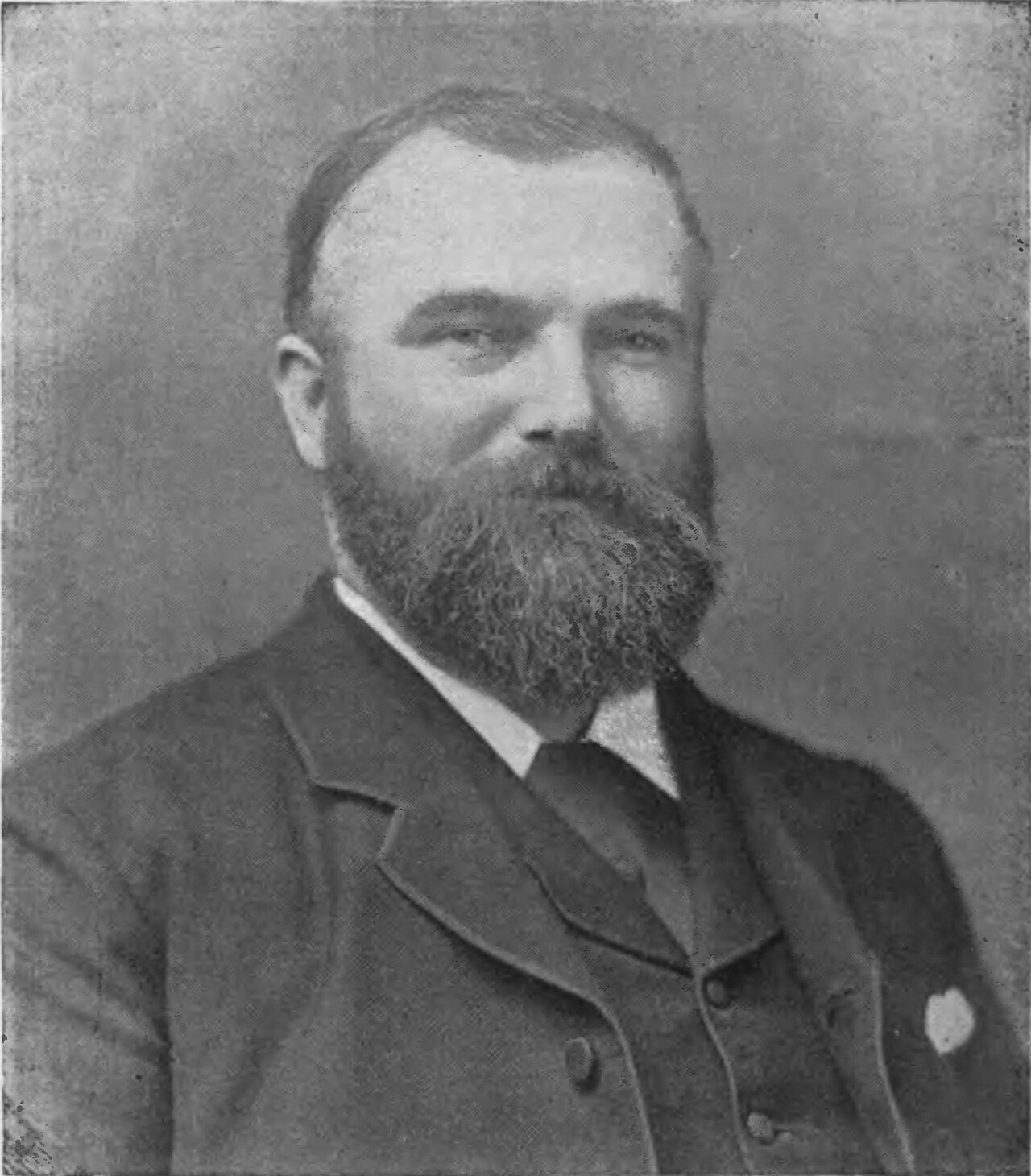
Public domain, via Wikimedia Commons.
Alexander MacBain (1855–1907)
Gaelic scholar and historian of the Highlands
Born at Glenfeshie in Badenoch, Alexander MacBain became one of the great Celtic scholars of his day. His Etymological Dictionary of the Gaelic Language (1896) is still used, and he edited W. F. Skene’s classic study of clan life, The Highlanders of Scotland.
From the school at Insh, Alexander went on to the Grammar School of Old Aberdeen and King’s College, Aberdeen. In 1880 he became rector of Raining’s School in Inverness, and he taught in Inverness for the rest of his life. He edited the Celtic Magazine and the Highland Monthly, wrote Celtic Mythology and Religion, and wrote many papers for the Gaelic Society of Inverness.
His annotated edition of Skene’s The Highlanders of Scotland appeared in 1902, and Aberdeen University made him a Doctor of Laws in 1901. He died in 1907 and is buried at Rothiemurchus in his native Badenoch.
Learn more:
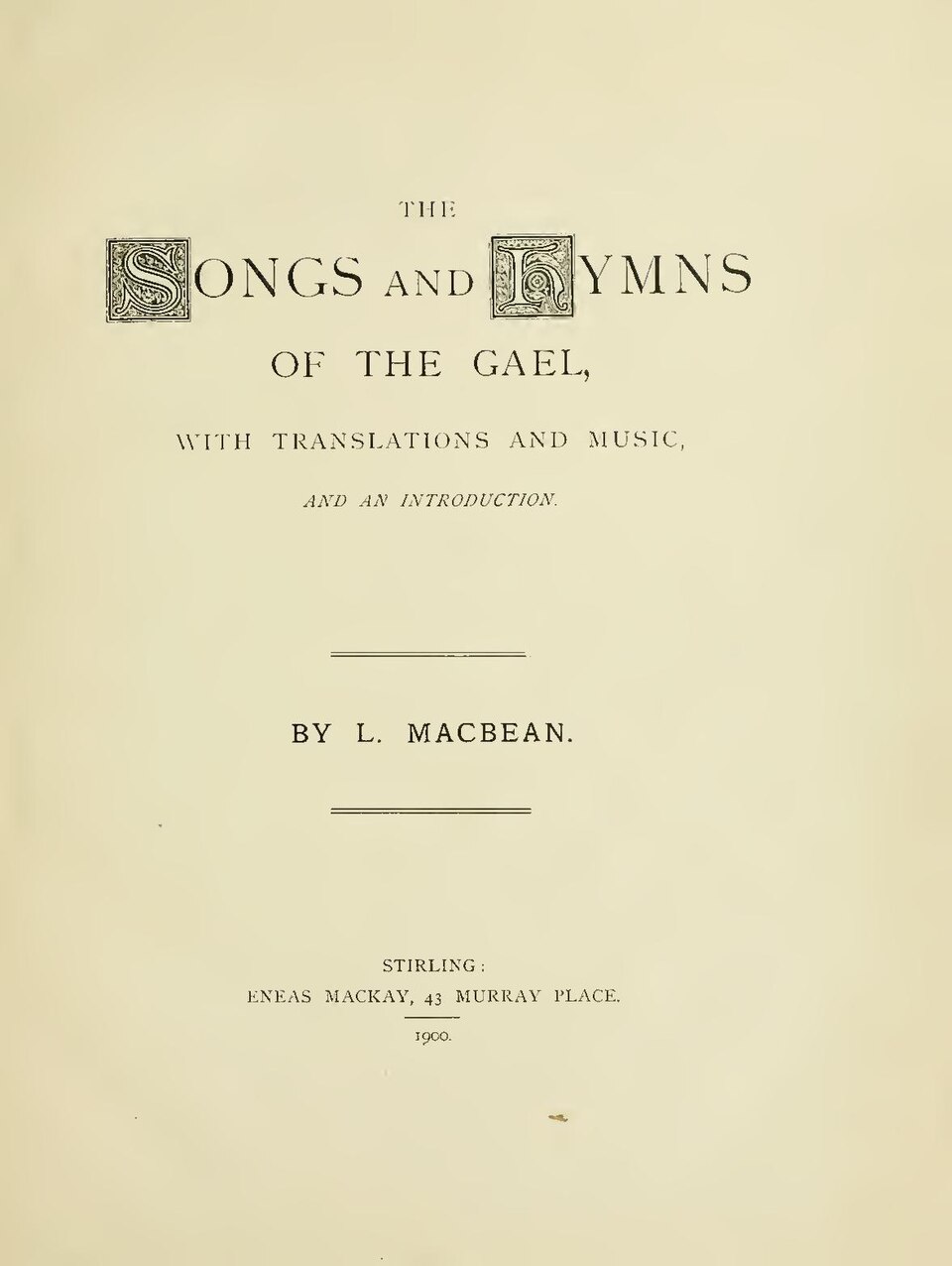
Public domain, via Wikimedia Commons.
Lachlan Macbean (1853–1931)
Editor and translator of Gaelic song
Born at Kiltarlity in Inverness-shire, Lachlan Macbean edited the Fifeshire Advertiser in Kirkcaldy and worked to save Gaelic songs from being forgotten. His English translation Child in the Manger carried a Gaelic Christmas hymn around the world, on the tune later used for Morning Has Broken.
Lachlan’s parents came from the Isle of Lewis, and he spoke only Gaelic until he went to school. He became a journalist and lived in Kirkcaldy for more than half his life, where he was an elder of St Brycedale Church.
In The Songs and Hymns of the Gael he translated a Christmas hymn by Mary MacDonald, a crofter’s wife from Mull, as Child in the Manger, and named its traditional melody “Bunessan” after the Mull village near her home. In 1931 Eleanor Farjeon wrote new words to the same tune: Morning Has Broken, which Cat Stevens made famous again in 1971.
Learn more:
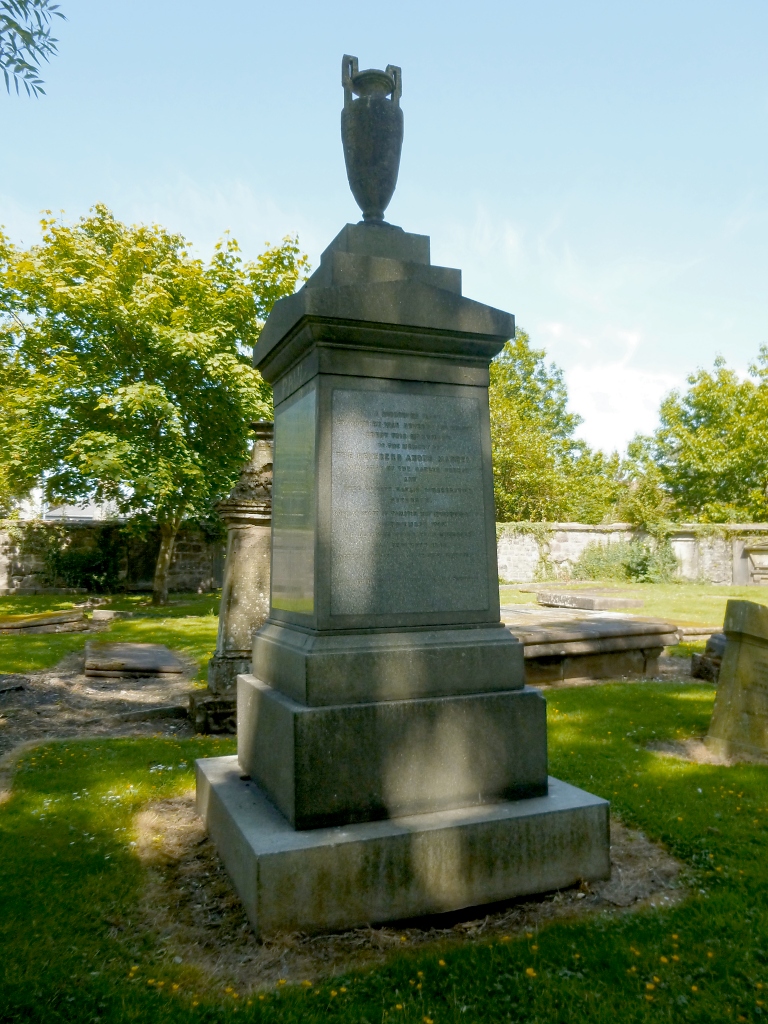
Memorial to Angus McBean. Photo: Lairich Rig, CC BY-SA 2.0, via Wikimedia Commons.
Angus McBean (1904–1990)
Photographer
Angus McBean, whose father was of Scottish descent, became one of Britain’s great portrait and theater photographers. He photographed Vivien Leigh for thirty years and took the cover photograph for the Beatles’ first album, Please Please Me.
Born in Newbridge, Monmouthshire, Angus spent seven years in the antiques department of Liberty’s in London and made theatrical masks before opening his own studio. His break came in 1936, when Ivor Novello commissioned masks for The Happy Hypocrite and then asked him to photograph the production. In the cast was a young Vivien Leigh, whom he went on to photograph in almost every role.
Before the war he became known for playful surrealist portraits such as “Flora Robson Surrealised” (1938). After it he was the official photographer of the Stratford Memorial Theatre, recording a generation of Britain’s great actors. His Please Please Me cover is one of the most recognizable record covers ever made.
Learn more:
Tartan on the Moon and on top of the world
What other clan has taken its tartan to the Moon and to the summit of Mount Everest?
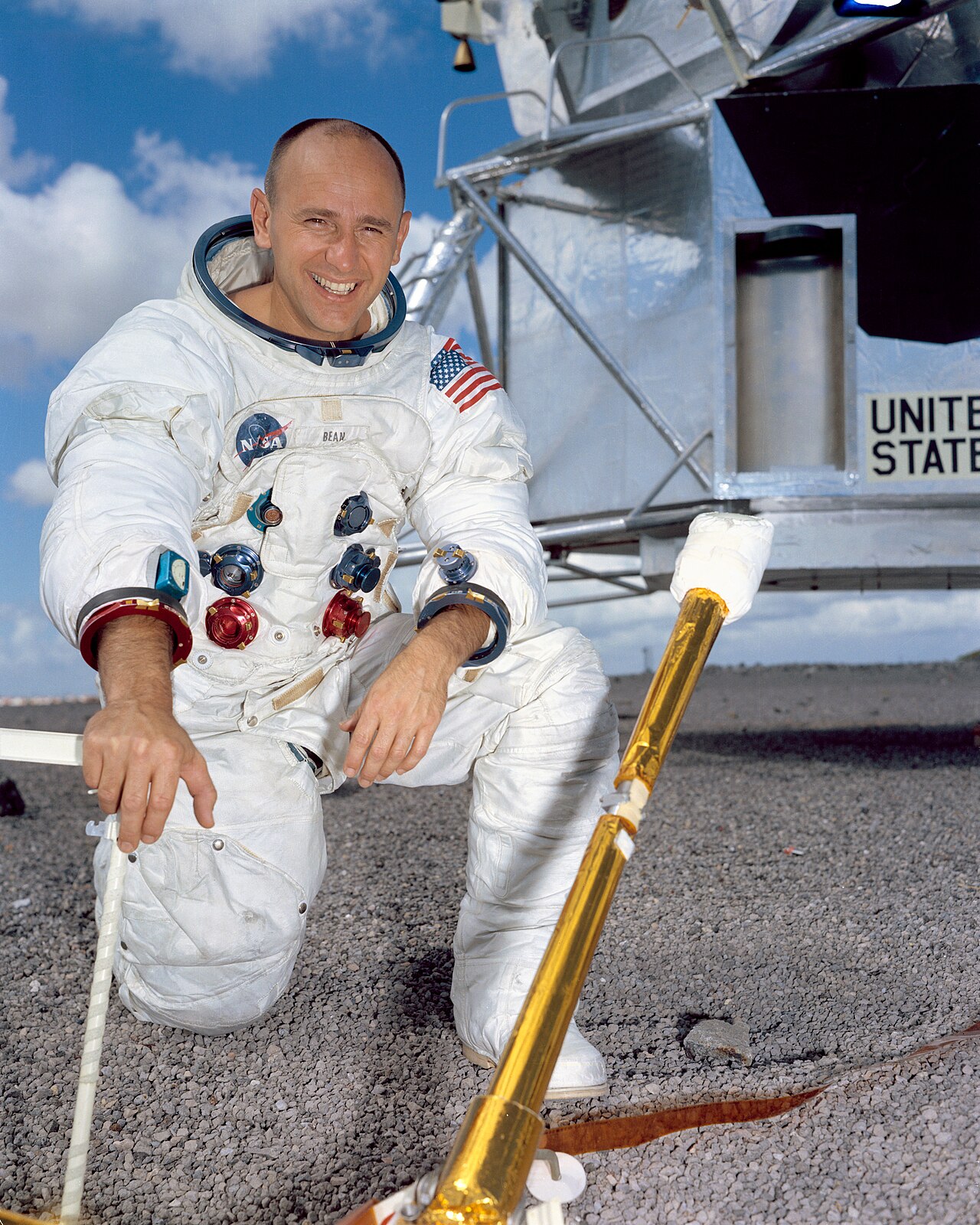
NASA. Public domain.
Captain Alan Bean (1932–2018)
Apollo 12 astronaut · fourth man to walk on the Moon · artist
In November 1969 Alan Bean carried a piece of MacBean tartan to the Moon and brought it home. He gave pieces to the clan and to St Bean’s Church at Fowlis Wester, and in 1996 presented the clan with his painting Clan MacBean Arrives on the Moon. An Alan Bean memorial was dedicated at McBain Memorial Park in 2022.
Born in Wheeler, Texas, Alan Bean became a U.S. Navy test pilot and NASA astronaut. On Apollo 12 he and Pete Conrad landed in the Ocean of Storms, and he became the fourth person to walk on the Moon. In 1973 he commanded Skylab 3, a record-setting 59-day mission.
The tartan came home with him: in 2005 he wrote that he did not leave any of it on the Moon’s surface, but shared it with the clan and with St Bean’s. In 1981 he left NASA to paint full time, saying he had seen sights “no artist’s eye, past or present, has ever viewed firsthand,” and he mixed real Moon dust into his paints. His painting for the clan is a lunar self-portrait in MacBean tartan.
Learn more:

Doug MacLaren and the summit of Everest
A McBean tartan at the top of the world
Doug MacLaren, a cousin of Marnie McBean, reached the summit of Mount Everest on 23 May 2001 and left a swatch of McBean tartan fluttering there. His message home: “Just where the name belongs – at the top of the world.”
Doug’s message to the family, as kept in the clan’s records:
“I gather from Ian that there is a piece of McBean tartan somewhere on the moon. Well a little more terrestrial, but there is now a swatch of McBean tartan (provided to me by Ian) fluttering proudly at the summit of Everest. Just where the name belongs – at the top of the world.”
Douglas MacLaren later received the Sir Edmund Hillary Foundation’s Award of Recognition for reaching the summit despite childhood heart surgery, asthma and the loss of a close friend and fellow climber.
Learn more:
Sport, business and public life

Marnie McBean (born 1968)
Olympic champion and Canadian senator
A rower born in Vancouver, Marnie McBean won three Olympic gold medals and a bronze, led Canada’s team at the Tokyo Olympics, and was appointed to the Senate of Canada for Ontario in 2023.
With her long-time partner Kathleen Heddle, Marnie won gold in the coxless pair and the eight at Barcelona in 1992, and gold in the double sculls and bronze in the quadruple sculls at Atlanta in 1996, with world titles in 1991 and 1995 as well. She was inducted into Canada’s Sports Hall of Fame in 1997 and made an Officer of the Order of Canada in 2013.
She has mentored young athletes and served as chef de mission of Team Canada at the Tokyo 2020 Games. Appointed to the Senate in December 2023, she was sworn in on 6 February 2024.
Learn more:

Leon Leonwood Bean (1872–1967)
Founder of L.L. Bean
The Maine outdoorsman behind L.L. Bean built one of America’s best-known outfitters from a single waterproof hunting boot. No family link to the clan has been proven, but the name brought one memorable tartan tale.
Born in Greenwood, Maine, Leon was orphaned at twelve. Tired of cold, wet feet while hunting, in 1912 he stitched leather tops onto rubber bottoms to make the Maine Hunting Shoe, and sold it by mail from his brother’s basement in Freeport. About 90 of the first 100 pairs came back with cracked rubber; he refunded every customer, fixed the design and carried on, and that promise became the heart of his business.
Later the company sold a tartan it called “MacBean Hunting”. Chief James McBain of McBain challenged it, as only the Chief can name a clan tartan, and it was renamed Bean of Freeport.
Learn more:

Edward and Ethel Beane
Titanic survivors, 1912
Newly married, Edward and Ethel Beane of Norwich, England, sailed second class on the Titanic to start their life together in America. Ethel was put in a lifeboat; Edward jumped into the freezing sea and was pulled into a boat, by some accounts his wife’s own.
Edward, a bricklayer, had emigrated to America in 1907 and came home to Norwich in 1912 to marry Ethel Clarke. Both their fathers worked for the local brewery. After a few days’ honeymoon they boarded the Titanic at Southampton, bound for New York.
On the night of the sinking Edward could not find a place in a boat. He jumped overboard and spent a long time in the icy water before he was pulled aboard; both were rescued by the Carpathia. “A man never knows what he’ll do in an emergency,” he said years later. They settled in Rochester, New York, and raised two sons. Edward died in 1948 and Ethel in 1983.
Learn more:
A MacBean no more
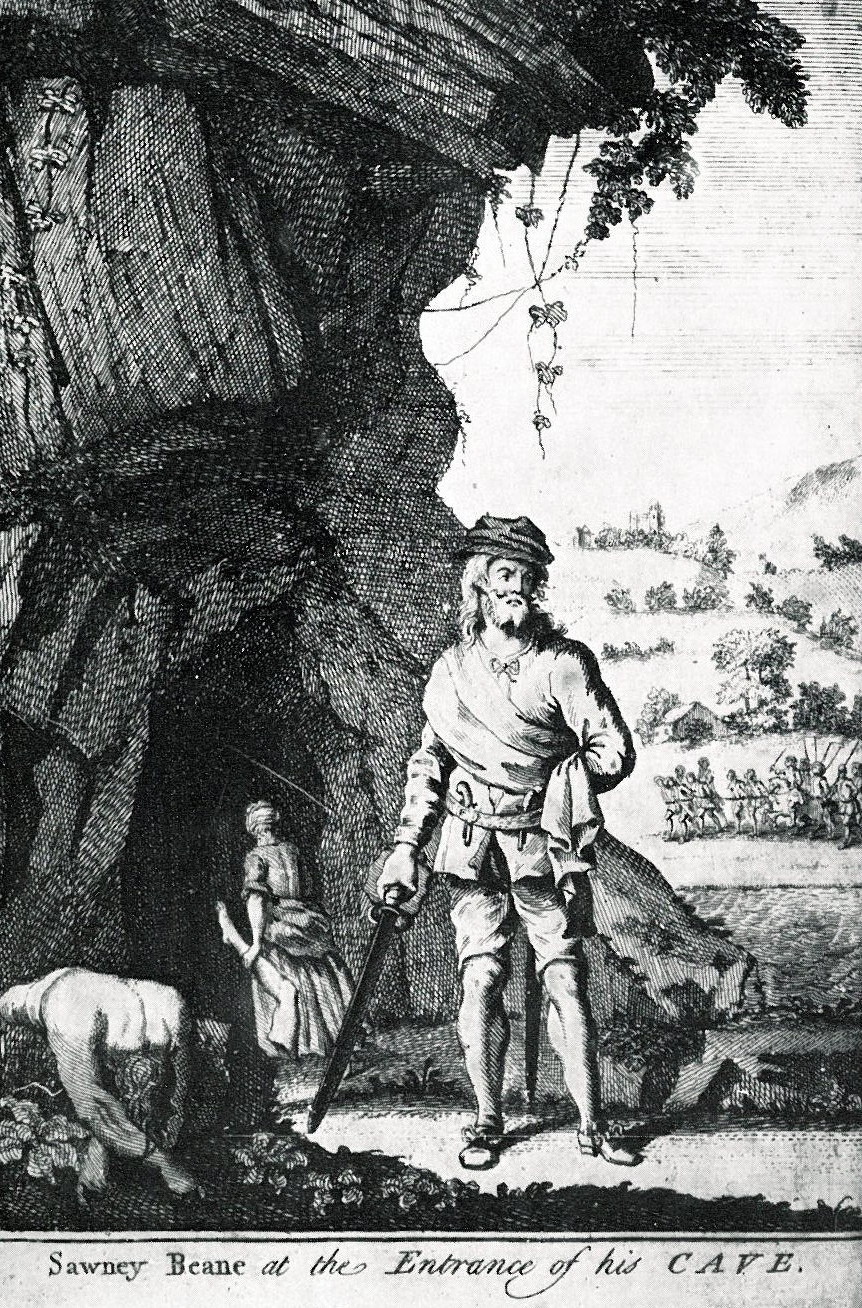
An old engraving of the legend. Public domain, via Wikimedia Commons.
Sawney Bean: a MacBean no more
Legend, not history
Generations of children have shivered at the tale of Sawney Bean, said to have lived in a sea cave on the Ayrshire coast with a huge family who robbed, killed and ate travelers. It is a great scary story. It is not our history.
The legend places the family in a cave at Bennane Head, between Girvan and Ballantrae, for some 25 years until a king’s search party captured them. But no diaries, records or newspapers of the time mention the hundreds of disappearances the tale describes.
The story spread through cheap printed chapbooks and the Newgate Calendar, the sensational London crime catalog of the 1700s and 1800s. “Sawney”, a Scots form of Alexander, was a common English insult for a Scot at the time, and anti-Scottish cartoons drew on the tale. Many see it as propaganda after the Jacobite risings, painting the Scots, and Highlanders above all, as savages. Others note that the same books painted English criminals just as luridly. Either way, Sawney Bean belongs to folklore, not to the family of MacBean.
Learn more:
Join Clan MacBean
Membership starts at $30 a year. Members receive The Register, help from the clan genealogist, member pricing, and news of gatherings and Highland games.
McBain of McBain (the Chief) · Clan MacBean Shop · Clan Chattan · Clan videos on YouTube · The Court of the Lord Lyon
Clan MacBean, Inc. is a 501(c)(3) charitable educational organization.
© 2026 Clan MacBean